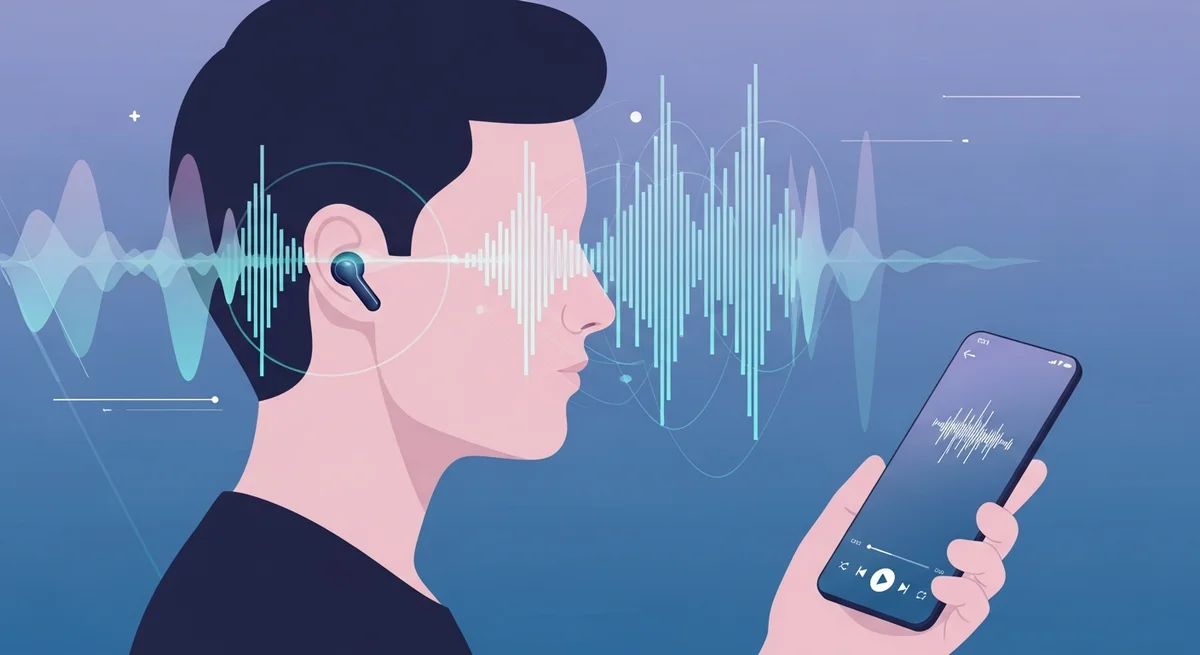
What Changes When Web Media Adds Audio to Articles
When we made web media articles available to listen to as audio, session duration tripled on average. Repeat rate rose by +5%. PV also increased by +5%.
Seeing these numbers, you might wonder, "Does audio really have that much impact?" Honestly, I was skeptical myself before we launched. At some deployments, the same direction of change keeps showing up. The magnitude varies by media outlet, but cases where simply delivering articles in audio reshapes the quality of the reader relationship are not uncommon.
But I want to state the premise first. Over my career I have supported monetization and deployment for more than 30 media companies, and the figures above come from limited measurement at a subset of PUBVOICE deployments. The measurement is a before-and-after comparison based on sessions in which the audio player was played; it is not a strict A/B test against a control group (no audio). The number of companies, sessions, and the measurement period cannot be publicly disclosed at this time, and the effect of background playback on GA4 dwell-time measurement has not been fully isolated either. Please read these as "the trend is moving in this direction." In this article, I will lay out why these changes happen.
I have spent years in monetization and data analytics, and I now build a product for turning articles into audio. Because this piece focuses on the numbers, I will leave the detailed background for other articles.

Why Web Media Audio Adoption Is Accelerating Now
Three trends are converging in the background.
The first is the expansion of the podcast market. According to the latest Edison Research survey (The Infinite Dial 2026), an estimated 167 million Americans aged 12 and older listen to a podcast at least once a month. That is 58% of the 12+ population. Monthly listenership for digital audio as a whole reaches 81% (approximately 233 million people), setting new records year after year.
What stands out is that adoption is no longer confined to younger demographics, historically audio's core audience; it is spreading rapidly into middle-aged and older segments. According to The Infinite Dial 2026, monthly online audio listenership among those aged 55 and older jumped 18 points in just two years, from 52% in 2024 to 70% in 2026. The fact that audio has now reached the middle-aged and older segments, which represent the bulk of the audience, means that web media readership and audio listenership are beginning to overlap.
In Japan as well, the Ministry of Internal Affairs and Communications' Information and Communications White Paper (Reiwa 7 Edition) reports that usage of video and audio services over the internet has been increasing year after year. "Listening" to news and articles via streaming is no longer just an early-adopter story.
The second is the growth of the audiobook market. According to estimates (MDB Promising Markets Forecast Report) from the Japan Management Association Research Institute, Japan's audiobook market is projected to expand to approximately 26 billion yen in fiscal 2024. The habit of listening to books during "multitasking time", such as commuting or doing housework, is steadily taking root.
The third is the improvement in quality and reduction in cost of AI voice synthesis. Over the past two to three years, the quality of TTS (text-to-speech) has reached a practical level. Natural intonation, contextually appropriate reading, accent adjustment. From a practitioner's standpoint, it is genuinely usable now.
Growth forecasts for the TTS market vary by research firm. Expert Market Research projects growth from USD 4.25 billion in 2025 at a CAGR of 23.3%, Mordor Intelligence puts it at around 15%, and Market Research Future at 13.2%. Either way, they agree on double-digit growth, and as competition has intensified, per-unit API pricing has fallen to a fraction of what it was a few years ago.
On social media, I have been seeing more and more posts about people starting to listen to podcasts. I do not think this is a passing fad; there was always a lot of room for audio to find its way into daily life. Accessible publishing tools and the spread of smartphones simply brought that latent demand to the surface.
"Reading" and "Listening" Are Not Ranked, They Sit Side by Side
You occasionally see claims that "audio is the future" or "text is obsolete." I see this not as a hierarchy but as a side-by-side arrangement.
Reading and listening fit different situations. When you want to concentrate and follow a logical argument, text is the better fit. When you want to grasp the outline while walking, audio is the better fit. During a commute, while doing housework, while out for a walk. Times when you cannot look at a screen are a poor match for text. But your ears still work even when your hands are occupied.
When I was involved in media monetization, one of the metrics I kept a close eye on was "dwell time." If you chase only PV (page views), you cannot tell whether readers actually engaged with the article. Under PV-first doctrine, "the time readers spend engaging with the article" tended to be deprioritized.
Audio makes this "engagement time" easy to visualize. Completion rate from playback start to finish, drop-off points, repeat plays. Behavioral data from listening tells us about reader intensity more directly than text does.
Three changes visible in the implementation data
So what specifically changes? Here are three changes that emerge from the implementation data.
Why dwell time grows
When you add an audio player to an article, readers start to "listen while reading." They stay on the article longer than when they only skim with their eyes. At some deployments, we have observed a tendency for dwell time to triple on average (the measurement premise is as stated above).
The reason is straightforward: while audio is playing, readers do not close the page. If they start listening during their commute, there is no natural moment to cut it short. As a result, time per session grows longer.
Repeat visits change their reason
This was the most surprising finding. The increase in repeat visits did not look like casual browsing; it looked like the reason for visiting had changed. From "occasionally opening via search" to "coming back to listen to the audio."
In the implementation data, repeat rate rose by +5%. PV also increased by +5%. I believe another contributing factor is that the audio player created a pathway that leads readers to other articles.
The voice closes the distance between writer and reader
Some media outlets use voice cloning to feature the editors' own voices. Readers recognize "this is the voice of someone at this outlet," and feedback indicates they feel a greater sense of familiarity than with text alone.
I believe this is a kind of value that cannot be captured in an advertising context. Dwell time and PV are quantifiable, but "the shift in how close readers feel to the media" only becomes visible when you look at surveys and feedback.

How Far Have the Costs of Audio Come Down?
"I'd like to try audio, but I'm worried about the cost" is something I hear often. To be honest, I had the same concern before implementation.
If you hire voice talent and record in a studio, the cost per article runs into tens of thousands of yen. For a web media outlet that publishes frequently, bearing that cost every time is unrealistic. Two or three years ago, that made the barrier to audio prohibitively high.
However, the cost of AI voice synthesis has fallen to a fraction of what it was a few years ago. The per-million-character pricing of major TTS APIs backs that up. We are no longer talking about "several thousand yen per article"; it has fallen to a level that fits within a SaaS monthly fee. End-to-end implementation, including automatic article retrieval and player embedding, has also become more realistic than before.
The other barrier is the "habit of listening." In Japan, the share of people who listen to podcasts regularly is still smaller than in the West. But Spotify and Amazon Music have begun investing heavily in audio content, and among younger users, audio playback on YouTube has already become an entry point into "listening" behavior.
According to The Infinite Dial 2026, monthly online audio listenership among Americans aged 55 and older has risen 18 points in two years. The fact that audio has begun to spread even among middle-aged and older demographics suggests that the same trend could emerge in the Japanese market. Once the tools are in place, habit formation can move faster than expected.
Habits do not change until the tools are in place. But once they are, change comes faster than you would expect.
What becomes measurable in the hours when ears are free
Audio content is not about producing a flood of new articles for a media outlet. It is about delivering the information already on your site, in a different time slot and through a different sense.
If articles can reach readers once more during the moments when their ears are free, what becomes measurable on the other side? Dwell time and repeat rate are just the entrance. Other metrics are starting to come into view, little by little.
On a different axis from the structural reasons ad revenue plateaus, audio offers an option for increasing the points of contact with readers. That, I believe, is the proper positioning of audio. A comparison of article audio services is laid out in a separate article.
Related articles
- How we're thinking about raising the value of existing ad slots without adding more — A hypothesis on how dwell time moves ad viewability
- Why Web Media Ad Revenue Stagnates: Dissecting 3 Structural Problems — Data on 29.5% ad blocking and 62.3% platform concentration
- A field comparison of web media article audio services, by people on the ground — Three tiers and the axes for selection
- Why we built an AI audio SaaS for web media — Why we didn't go with an ad-supported model
- Imitation in the AI era and delivery beyond text — What remains for publishers when 74% of new pages contain AI content
